Street View Extractor

Google Street View Extractor

By extract street view, google streetview, Panoramas

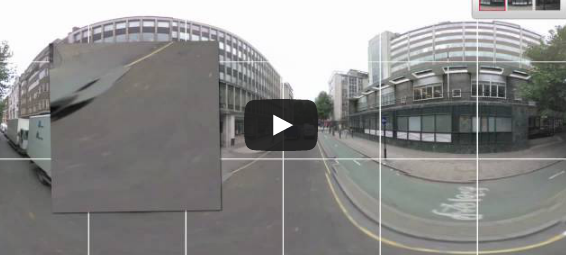
Jamie Thompson has put together a handy little webservice that mashes up postcode geodata with the Street View Images API. In short, it allows you to get access to the unwarped Street View panorama and the underlying tiles.
We have put together a short movie to show the service in action:

As Jamie states, its handy in that it let’s you directly request a street view thumbnail with nothing more than a postcode.
The format of the request looks like this:
http://geo.jamiethompson.co.uk/streetview/[POSTCODE]_[WIDTH]x[HEIGHT].jpg
You can try it out here – just type in your own postcode.
Thanks go to Dr Chris Speed for picking this up, you can follow Chris on twitter.

Urban Modelling: Algorithms, Calibrations, Predictions

By Mike Batty, Urban Modelling

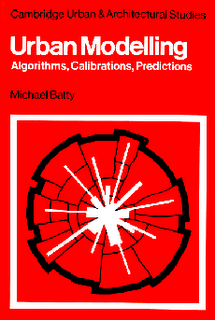
Mike Batty of CASAUrban Modelling: Algorithms, Calibrations, Predictions” which was originally published in 1976 has been republished by popular demand…
 

The book covers a plethora of topics, introducing the reader to simulation models and the need for such methods. For example, “simulation methods are used to derive the behaviour of the system when the system is too complex to be modelled using the more direct analytic approach (Batty, 1976).”

The book provides a summary of the first generation of urban models referring to the key authors and models such as Lowry (1964) model and it successor including the Pittsburgh Time-Oriented Metropolitan Model (TOMM), the Projective Land Use Model (PLUM) for the San Francisco area, and a wide variety of Activity Allocation and Stocks-Activities models. The book presents how such models were mainly developed for practical planning situations through metropolitan planning agencies or consultants in North America and in several European cities. How at first, these models where developed with the aim of solving land-use and transportation questions, later being employed to address a wider range of urban problems.

Anyone interested in urban modelling and spatial interaction models is recommended to explore this book via Amazon.

Reference:
Lowry, I.S. (1964), A Model of Metropolis, Rand Corporation, Santa Monica, CA.

Urban Modelling: Algorithms, Calibrations, Predictions

By Mike Batty, Urban Modelling

Mike Batty of CASAUrban Modelling: Algorithms, Calibrations, Predictions” which was originally published in 1976 has been republished by popular demand…
 

The book covers a plethora of topics, introducing the reader to simulation models and the need for such methods. For example, “simulation methods are used to derive the behaviour of the system when the system is too complex to be modelled using the more direct analytic approach (Batty, 1976).”

The book provides a summary of the first generation of urban models referring to the key authors and models such as Lowry (1964) model and it successor including the Pittsburgh Time-Oriented Metropolitan Model (TOMM), the Projective Land Use Model (PLUM) for the San Francisco area, and a wide variety of Activity Allocation and Stocks-Activities models. The book presents how such models were mainly developed for practical planning situations through metropolitan planning agencies or consultants in North America and in several European cities. How at first, these models where developed with the aim of solving land-use and transportation questions, later being employed to address a wider range of urban problems.

Anyone interested in urban modelling and spatial interaction models is recommended to explore this book via Amazon.

Reference:
Lowry, I.S. (1964), A Model of Metropolis, Rand Corporation, Santa Monica, CA.

William J. Mitchell: A sad loss of one of the best

By Posts

MIT News has reported that William J. Mitchell, the former dean of MIT’s School of Architecture and Planning, who pioneered urban designs for networked, “smart” cities and helped oversee an ambitious building program that transformed MIT’s physical campus, died on June 11 after a long battle with cancer. He was 65.

Mitchell was considered one of the world’s leading urban theorists. Through the work of his Smart Cities research group at the MIT Media Lab, he pioneered new approaches to integrating design and technology to make cities more responsive to their citizens and more efficient in their use of resources. He likened tomorrow’s cities to living organisms or very-large-scale robots, with nervous systems that enable them to sense changes in the needs of their inhabitants and external conditions, and respond to these needs.
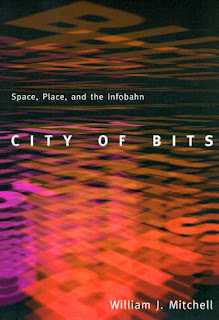
Bills book City of Bits: Space, Place, and the Infobahn (1995) had a major influence on our work here at digital urban. While not technical per-se it is a book full of ideas looking into a new type of city, and the systems of virtual spaces interconnected by the Internet – or – information superhighway as it was then known. Bill’s follow up e-topia: Urban Life, Jim-But Not As We Know It (1999) was equally influential.

It is a sad day, Bill was one of the greats, he gave a lecture in CASA while in London and it remains one of the best lectures we have had from an external speaker.

A memorial service will be held at MIT at the new Media Lab Complex, 75 Amherst Street, Cambridge, MA, on Wednesday, June 16 at 10 a.m. Our thoughts go to his family and friends.
Close Menu

About Salient

The Castle
Unit 345
2500 Castle Dr
Manhattan, NY

T: +216 (0)40 3629 4753
E: hello@themenectar.com

Archives