 We have been adding some new maps recently to MapTube, our most recent being the global price of Big Mac’s around the world.
Based on the Big Mac Index which according to the Wiki was “introduced by The Economist in September 1986 as a humorous illustration and has been published by that paper annually since then. The index also gave rise to the word burgernomics.
One suggested method of predicting exchange rate movements is that the rate between two currencies should naturally adjust so that a sample basket of goods and services should cost the same in both currencies. In the Big Mac Index, the “basket” in question is considered to be a single Big Mac burger as sold by the McDonald’s fast food restaurant chain.
The Big Mac was chosen because it is available to a common specification in many countries around the world, with local McDonald’s franchisees having significant responsibility for negotiating input prices. For these reasons, the index enables a comparison between many countries’ currencies. Some menu items are market specific, which would hinder a comparison, if used. Still other menu items are specially priced, such as the dollar menu in many U.S. restaurants consisting of sandwiches and other items that cost $1″.
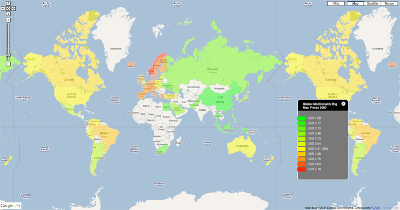
Mapping the index provides and instant guide to prices around the world – it makes interesting viewing, China is by far the cheapest place for a BigMac, visualised all thanks to the increasingly easy ways to view and create geotagged information.
You can View the Map yourself via MapTube, data thanks to The Economist.
See the Big Mac Index Wikipedia page for more information.

