High Dynamic Range Panoramas – UCL Roof

By Panoramas 20-30

Panoramas cover a complete 360 x 180 field of view and thus the image creation process has to take into account a range of lighting conditions which are at best averaged out over the entire scene. This process often results in a loss of detail in shadows or overblown exposures when photographing the sky or windows in the case of capturing an internal scene.

The quality of the image is further restricted by the cameras limited dynamic range when compared to the human eye – resulting in panoramas which often do not represent how the eye would naturally view a scene. To counter this we can use High Dynamic Range (HDR) imaging to capture a scene over a known number of exposure settings and thus create a series of images that reflect the dynamic range closer to that of human vision.

In our first test we have captured a view from the roof of University College London on a clear sunny day. This would normally result in dark shadows in sections of the image due to having to average the exposure over the whole panorama. A standard capture technique would result in the image displayed below:
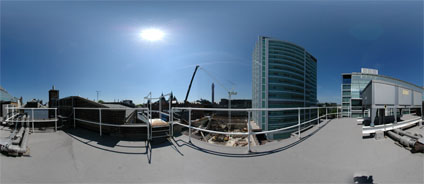
If we then capture a further two versions of the scene – both under and over exposed respectively – we can capture a wider dynamic range:
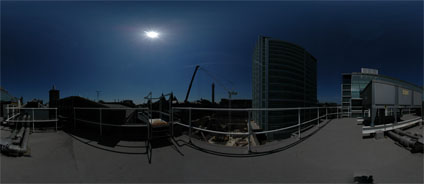
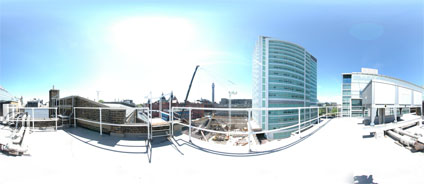
Using HDR software these images can then be Tone Mapped to create a final view which includes both the shadows and the highlights of the scene:
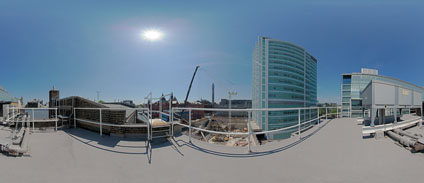
A total of 21 images were captured to create the panorama compared to the normal 6 for traditional techniqes.

View the final HDR panorama (2.2mb).
High Dynamic Range Panoramas – UCL Roof

By Panoramas 20-30

Panoramas cover a complete 360 x 180 field of view and thus the image creation process has to take into account a range of lighting conditions which are at best averaged out over the entire scene. This process often results in a loss of detail in shadows or overblown exposures when photographing the sky or windows in the case of capturing an internal scene.

The quality of the image is further restricted by the cameras limited dynamic range when compared to the human eye – resulting in panoramas which often do not represent how the eye would naturally view a scene. To counter this we can use High Dynamic Range (HDR) imaging to capture a scene over a known number of exposure settings and thus create a series of images that reflect the dynamic range closer to that of human vision.

In our first test we have captured a view from the roof of University College London on a clear sunny day. This would normally result in dark shadows in sections of the image due to having to average the exposure over the whole panorama. A standard capture technique would result in the image displayed below:

If we then capture a further two versions of the scene – both under and over exposed respectively – we can capture a wider dynamic range:

Using HDR software these images can then be Tone Mapped to create a final view which includes both the shadows and the highlights of the scene:

A total of 21 images were captured to create the panorama compared to the normal 6 for traditional techniqes.

View the final HDR panorama (2.2mb).
Twin Peaks Panorama Embedded Movie – Dream of Advertising?

By Panoramas 20-30

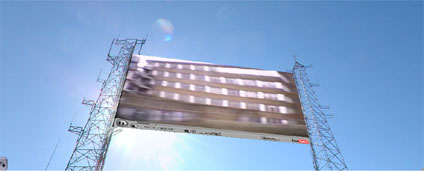
Every now and again innovations come along that make us smile. This week has seen two come our attention (more on the second in later posts). The first one is the ability to embed YouTube movies into panoramas creating the ability to pump out adverts or just general content in panoramic space.

Using DevalVR which is the best new viewer on the block, it is possible to stream in movies. There are various examples out there using whiteboards or plasma tv’s in panoramas but if your going to do an example its best to do it big and show a movie over Twin Peaks San Francisco.

Load up the example, pan round to the Twin Peaks Transmitters and click play… its our Ipod and Urban Perception movie looking out towards San Fran.

View the Panorama of Twin Peaks with the Embedded Movie

Ipod Culture – Perception of Urban Space Now with YouTube Movies

By Ipod Audio

Our perception of urban space is based on sight, smell, sound and to some extent touch. Portable music became main stream in 1979 with the introduction of the Sony Walkman and with it came a change to the way we perceive the space around us. By filtering out the natural and man made sounds of the city we are able to immerses ourselves in a alternative reality of our choosing.

The rise of the Ipod has placed this change of perception at our fingertips – to illustrate this we placed a webcam in our button hole, linked it to a laptop in our bag and record the sound from the ipod playing on our way to work.

The resulting movie is an insight into how the choice of music changes our view of the urban environment. In our case it is almost immersing yourself in a real-time MTV world as we consume the urban environment accompanied by the beats of a dance track. Our walking pace moves in time with the music and the environment becomes a backdrop to the video of space.

Perception changes according to the music chosen… take a look at the video and let us know any thoughts. Note the quality is mixed due to the mounting of a webcam in a jacket button hole but as a first test it gets the point across…

*****

Continuing the series we have a new movie exploring the perception of urban space and audio – this time from a train approaching the city. The music on shuffle mode is in stark contrast to the previous movie and thus creates a different perceptual view of the city.

We are still not sure where we are going with these but any thoughts are welcome…

Close Menu

About Salient

The Castle
Unit 345
2500 Castle Dr
Manhattan, NY

T: +216 (0)40 3629 4753
E: hello@themenectar.com

Archives